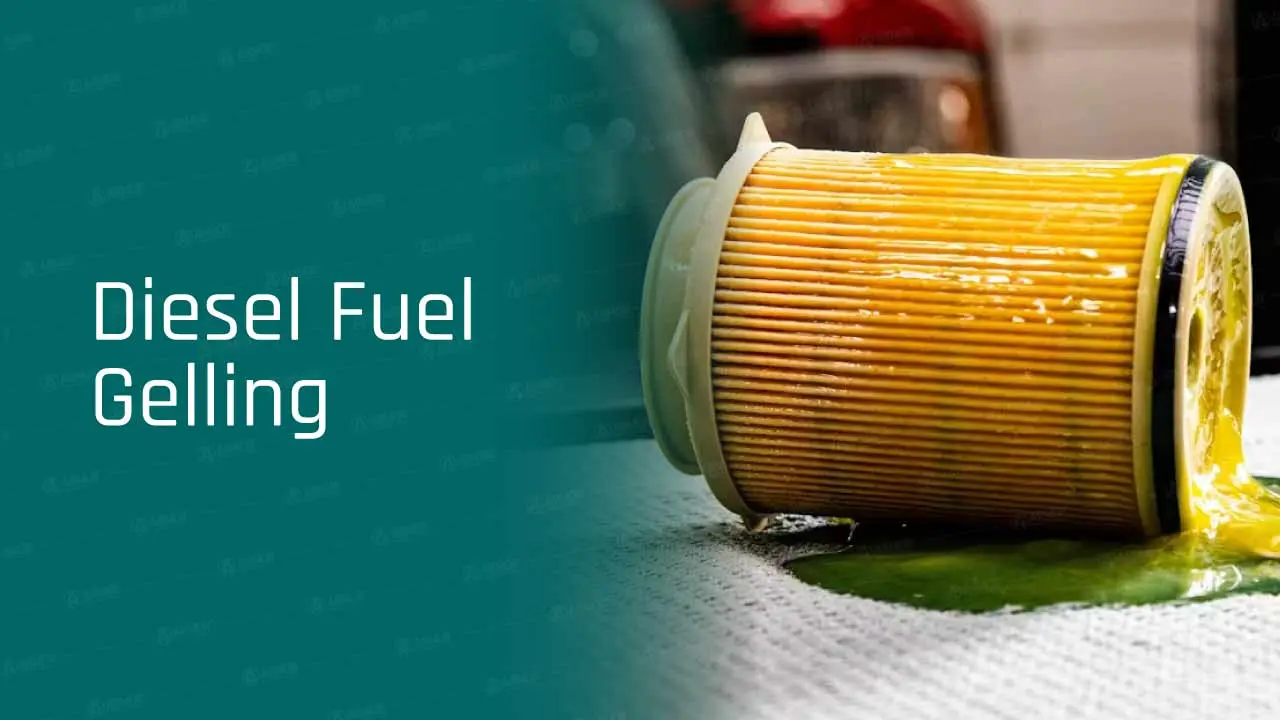
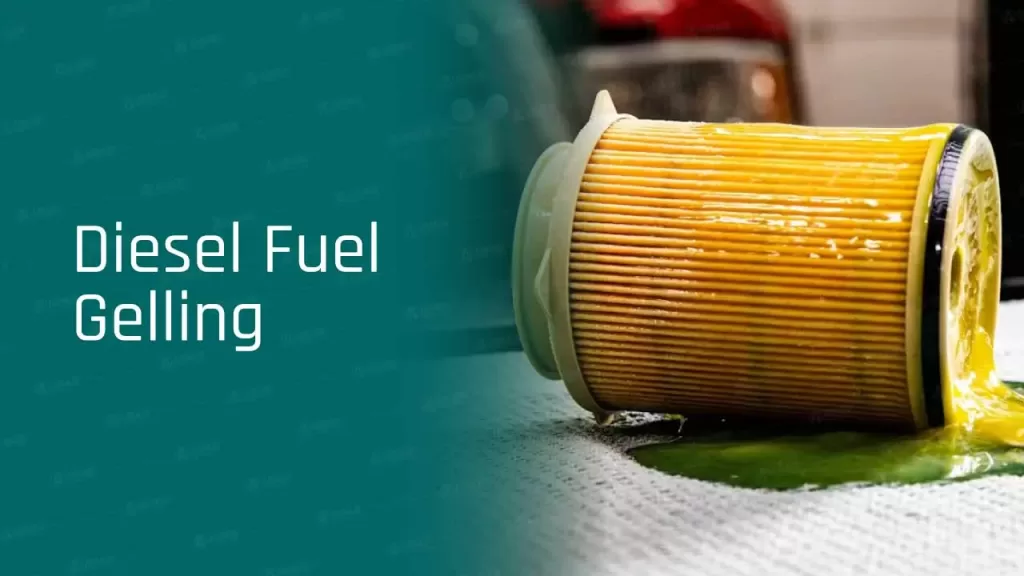
When the temperature drops, diesel fuel can transform from a liquid into a thick, waxy substance. This process, known as diesel fuel gelling, is a major concern for any diesel vehicle operator during cold weather. It clogs fuel lines and filters, starving the engine of fuel and preventing it from starting or running properly.
Understanding the mechanics of fuel gelling is the first step toward prevention. The problem begins with the paraffin wax found in diesel fuel. This wax is normally a harmless, dissolved component that improves viscosity and lubrication. However, in cold temperatures, it crystallizes, leading to gelled fuel and significant operational issues for your diesel engine.
Diesel fuel contains paraffin wax, which enhances its performance and lubricity under normal conditions. As temperatures fall, this wax begins to solidify, forming crystals. These crystals interlock, turning the liquid fuel into a thick, waxy mass that cannot flow through the fuel system. This is the essence of diesel fuel gelling.
The gelling process doesn't happen at a single, fixed temperature. Instead, it occurs across a temperature range, defined by three key stages: the cloud point, the cold filter plugging point (CFPP), and the pour point. Each stage represents a progressive level of wax crystallization and thickening of the fuel.
The cloud point is the temperature at which paraffin wax in diesel fuel begins to crystallize and become visible, making the fuel appear cloudy. For standard #2 diesel fuel, this typically occurs around 32°F (0°C). While the engine may still run, this is the first warning sign that fuel gelling is imminent.
Once the cloud point is reached, the wax crystals are still small enough to pass through the fuel filter. However, their presence indicates that the fuel's temperature is dropping to a critical level. Ignoring this sign can lead to more severe gelling problems as the cold persists.
As the temperature continues to drop below the cloud point, the wax crystals grow larger. The cold filter plugging point (CFPP) is the temperature at which these crystals accumulate and become large enough to clog the fuel filter. This blockage restricts or completely stops fuel flow to the engine.
The CFPP is the most critical temperature for diesel operators. A clogged fuel filter will prevent the engine from starting or cause it to stall while running. This is where diesel gelling transitions from a potential issue to a definite operational failure, often leaving a vehicle stranded.
The pour point is the lowest temperature at which the fuel will still flow. Below this temperature, the diesel fuel has gelled so completely that it is essentially a solid wax. At this stage, the fuel will not move through the fuel tank or fuel lines, making engine operation impossible. The pour point for #2 diesel is often around 10°F to 20°F (-12°C to -6°C).
Preventing diesel fuel from gelling is far more effective than dealing with a gelled-up engine. Proactive measures ensure your vehicle remains operational throughout the coldest months. The primary strategies involve using anti-gel additives, switching to winter-grade fuel, and keeping the fuel system warm.
Effective fuel management is key to avoiding the hassle and expense of a gelled diesel engine. By taking a few simple steps before cold weather arrives, you can ensure reliable performance and prevent fuel system damage.
The most common and effective way to prevent diesel fuel gelling is by using a specialized fuel additive. Anti-gel additives work by lowering the freezing point of the paraffin wax in the fuel. They modify the wax crystals, keeping them small and preventing them from interlocking and clogging the fuel filter.
For best results, the additive must be mixed with the fuel before temperatures drop. Adding it to already gelled fuel is ineffective. Always add the anti-gel treatment to your fuel tank before filling up to ensure proper mixing and circulation throughout the fuel system. These diesel fuel additives are essential for cold weather operation.
Fuel suppliers often offer winterized diesel fuel blends during colder months. These blends are formulated to resist gelling at lower temperatures. The most common approach is to blend #2 diesel with #1 diesel, also known as kerosene. #1 diesel has a much lower cloud point and contains less paraffin wax.
This fuel blend has a lower gelling temperature, providing better cold-weather performance. While effective, winter blends can sometimes result in slightly reduced fuel economy and lubricity compared to standard #2 diesel. Using a quality additive can help offset these effects.
Maintaining a full fuel tank helps prevent diesel gelling in two ways. First, it reduces the amount of empty space in the tank where water vapor can condense. Water in the fuel can freeze, forming ice crystals that exacerbate the gelling problem and can damage fuel injectors.
Second, a larger volume of fuel loses heat more slowly than a smaller volume. This can help keep the fuel temperature above its cloud point for a longer period, especially during overnight parking. It's a simple but effective part of any winter fuel management strategy.
The exact temperature at which diesel fuel gels can vary based on the fuel's specific composition and quality. However, the gelling process for standard #2 diesel fuel typically begins when the temperature drops to around 32°F (0°C), which is its cloud point.
As the temperature continues to fall, the gelling becomes more severe. The fuel will likely clog the fuel filter between 10°F and 15°F (-12°C and -9°C). This is a critical range where diesel gelling often renders a vehicle inoperable.
The main difference between #1 and #2 diesel fuel is their viscosity and paraffin wax content. #2 diesel is more common, has higher energy content for better fuel mileage, and provides more lubrication. However, its higher wax content makes it prone to gelling in cold weather.
#1 diesel (kerosene) is less viscous and has a significantly lower gel point, making it ideal for very cold climates. Blending #1 and #2 diesel is a common strategy to create a winter fuel that balances cold-flow properties with energy content.
Diesel Exhaust Fluid (DEF) is a separate fluid used in modern diesel engines with Selective Catalytic Reduction (SCR) systems. DEF is a mixture of urea and de-ionized water, and it freezes at 12°F (-11°C). However, this is not a cause for concern.
DEF systems are designed with heaters that thaw the fluid quickly after the engine starts. The system will operate normally once the DEF is liquid again, and freezing does not damage the fluid or the SCR components.
If you find yourself with a gelled diesel engine, the primary goal is to warm the fuel and melt the wax crystals. This can be a challenging task, especially if you are stranded in a remote location. Patience and the right approach are crucial to safely ungel diesel fuel.
Never use an open flame to try and thaw a fuel tank or fuel lines. This is extremely dangerous and can cause a fire or explosion. Instead, focus on methods that apply gentle, indirect heat to the fuel system components.
The simplest and safest way to ungel diesel fuel is to move the vehicle into a heated garage or workshop. This allows the entire fuel system, from the fuel tank to the fuel filter and lines, to warm up gradually and evenly. It may take several hours for the gelled fuel to liquefy completely.
Once the fuel has returned to a liquid state, it's a good idea to add a diesel winter rescue additive to the tank. This will help dissolve any remaining wax crystals and prevent the fuel from gelling again once the vehicle is back in the cold.
The fuel filter is the component most likely to be clogged by wax crystals. Even after the fuel in the tank has thawed, the filter can remain plugged. Replacing the clogged fuel filter with a new one is often a necessary step to restore fuel flow.
Always carry a spare fuel filter and the tools to change it during the winter months. After replacing the filter, you may need to prime the fuel system to remove any air that entered the lines. This will ensure the diesel engine starts smoothly.
If moving the vehicle isn't an option, a diesel winter rescue additive can help. These products are formulated to dissolve the paraffin wax in gelled diesel fuel and return it to a liquid state. They are more concentrated than standard anti-gel additives.
Pour the recommended amount of the rescue product directly into the fuel tank. It will take some time for the additive to work its way through the system and dissolve the gel, especially in the fuel filter. Replacing the filter after using a rescue product is often recommended for best results.
To prevent diesel fuel gelling, you can use three main strategies. First, add an anti-gel fuel additive before the temperature drops. Second, switch to a winterized diesel fuel blend, which mixes #2 diesel with #1 diesel for better cold flow. Finally, keep your fuel tank full to reduce water condensation.
The most effective thing to add to diesel fuel to prevent gelling is an anti-gel additive. These products work by modifying the paraffin wax crystals that form in cold weather, keeping them small enough to pass through the fuel filter and preventing the fuel from thickening into a gel.
While idling does generate some heat, it is not a reliable method to prevent diesel fuel from gelling. The fuel in the tank and lines can still get cold enough for gelling to occur, especially in extremely cold temperatures. Proactive fuel management with additives is a much safer approach.
Yes, you can reverse diesel fuel gelling. The safest method is to move the vehicle to a heated space to allow the fuel system to warm up gradually. You can also use a diesel winter rescue product designed to dissolve the wax crystals. Replacing the clogged fuel filter is often necessary to ungel diesel fuel completely.
A diesel fuel anti-gel treatment is a chemical additive that prevents diesel fuel from turning into a gel-like substance in cold temperatures. This treatment modifies the paraffin wax crystals in the fuel, making them smaller to ensure they pass through the fuel filter easily without clogging it. This is a preventative measure that should be used before temperatures drop.
The gelling process for standard #2 diesel fuel begins at its cloud point, around 32°F (0°C), when wax crystals start to form. As temperatures fall to between 10°F and 15°F (-12°C to -9°C), these crystals become large enough to clog the fuel filter, which is when most diesel gelling problems occur.
The first sign of diesel gelling is the fuel reaching its "cloud point," where it appears hazy or cloudy. This indicates that wax crystals are forming. In cold weather, if your diesel equipment or vehicle feels sluggish or fails to start, it is a strong symptom that fuel gelling is happening and has likely clogged the fuel filter.
Diesel fuel contains paraffin wax, which improves its performance. In cold temperatures, this wax crystallizes. As the temperature drops further, these crystals interlock and grow, causing the fuel to thicken and eventually turn into a waxy solid. This is the process that causes diesel fuel to gel.
Diesel fuel anti-gel additives work by lowering the cold filter plugging point (CFPP) of the fuel. The CFPP is the lowest temperature at which a fuel will flow freely through a fuel filter. This additives contain specialized polymers that effectively coat the wax crystals as they begin to form, preventing them from clumping together into a larger mass that could obstruct the fuel system. This ensures your engine starts and operates smoothly in cold weather.