Modern engines demand increasingly advanced lubricants to meet escalating performance, efficiency, and environmental requirements. The continuous evolution in engine design, driven by technological innovations and stringent environmental regulations, places unprecedented stress on lubricating fluids.
Contemporary internal combustion engines are engineered to deliver higher levels of performance, improved fuel efficiency, and reduced emissions. This evolution incorporates technologies such as engine downsizing, turbocharging, and Gasoline Direct Injection (GDI).
While these advancements offer significant benefits, they also dramatically increase the stress on engine components and lubricants due to elevated operating temperatures and pressures. This intensified push for efficiency and emission reduction, stemming from both regulatory mandates and market forces, is the primary driver behind the development of new oil specifications. The lubricant industry's role extends beyond merely reacting to engine design; it is a crucial enabler for Original Equipment Manufacturers (OEMs) to achieve both performance goals and regulatory compliance. This signifies a symbiotic and ongoing relationship where lubrication innovation is essential for progress in the automotive sector.
Gasoline Direct Injection (GDI) and Turbocharged Gasoline Direct Injection (T-GDI) engines have become increasingly prevalent in new vehicles. By 2018, approximately 25% of new cars in the United States featured T-GDI engines. These technologies allow smaller engines to produce comparable power to larger, older counterparts, leading to significant improvements in fuel economy.1 However, these benefits come with a critical and unique engine performance issue: Low-Speed Pre-Ignition (LSPI).
The advent of Turbocharged Gasoline Direct Injection (T-GDI) engines marked a leap in engine efficiency, but it also unveiled an unexpected and destructive phenomenon known as Low-Speed Pre-Ignition (LSPI).
Low-Speed Pre-Ignition (LSPI) is an uncontrolled, premature combustion event that occurs before the spark plug ignites the fuel-air mixture. It typically manifests at low engine speeds and high loads in GDI and T-GDI engines.1 Audibly, it can present as a "super-knock" or "thumping sound" . The consequences range from reduced engine performance and efficiency to severe and catastrophic engine damage, including broken spark plugs, cracked pistons, bent connecting rods, and even complete engine failure.
Reports indicate that while many automotive technicians are aware of the existence of LSPI, a significantly smaller percentage can identify engines susceptible to this problem . This creates a critical gap: a serious issue that can be difficult to diagnose until substantial damage has occurred. This "silent threat" aspect implies that early detection by the average driver is challenging, making preventative measures, such as using the correct oil, even more crucial. This underscores the importance of clear communication from oil manufacturers and OEMs.
Although the precise root cause of LSPI is not yet fully understood, research points to several contributing factors . One primary cause is the formation of fuel-oil droplets; when injected fuel contacts the oil-lubricated cylinder walls, a highly combustible fuel-oil compound can form and ignite prematurely . A second major cause is hot glowing particles; soot and oil particles can accumulate on cylinder walls, pistons, and valves, and these particles can become incandescently hot, igniting the fuel-air mixture early .
Additionally, additive chemistry in engine oil plays a critical role; certain lubricant additives, particularly calcium-containing detergents, have been strongly linked to promoting LSPI. In contrast, magnesium has shown little impact or even helped to mitigate LSPI. While other oil formulation options exist to address LSPI, rebalancing calcium and magnesium levels is the preferred approach observed in many SN PLUS oils.
These factors demonstrate that LSPI is not a singular problem with a single solution, but rather a complex phenomenon arising from the interplay of fuel quality, lubricant chemistry, and engine design and operating parameters . This complexity underscores why a multi-faceted approach (engine design changes, fuel quality improvements, and especially oil reformulation) is needed to effectively combat it . This also explains why API SN PLUS OIL is a critical and specific lubricant intervention.
Vehicles equipped with Gasoline Direct Injection (GDI) and Turbocharged Gasoline Direct Injection (T-GDI) engines are most susceptible to LSPI.1 These engines are named differently by various manufacturers (e.g., GDI, FSI, SIDI, EcoBoost). Specific manufacturers whose models have shown a propensity for LSPI include Kia, Hyundai, Volkswagen, and Buick . Vehicle owners should always consult their owner's manual to determine if their car has a GDI/T-GDI engine .
Reports indicate that awareness of the LSPI problem exists, but identifying affected vehicles remains a challenge even for professionals . This highlights the urgent need for publicly available information. By providing examples of manufacturers and advising consumers to check their owner's manuals for GDI/T-GDI engine types, they are directly empowered to assess their risk and take preventative action. This moves beyond theoretical knowledge to actionable, practical advice.
Table 1: Engine Types/Manufacturers Prone to LSPI (Examples)
| Engine Type | Common Manufacturer Designations | Manufacturers/Models Prone to LSPI (Examples) | Action for Vehicle Owners |
| Gasoline Direct Injection (GDI) | GDI, FSI, SIDI, EcoBoost | Kia, Hyundai, Volkswagen, Buick | Check owner's manual for GDI/T-GDI engine type |
| Turbocharged Gasoline Direct Injection (T-GDI) |
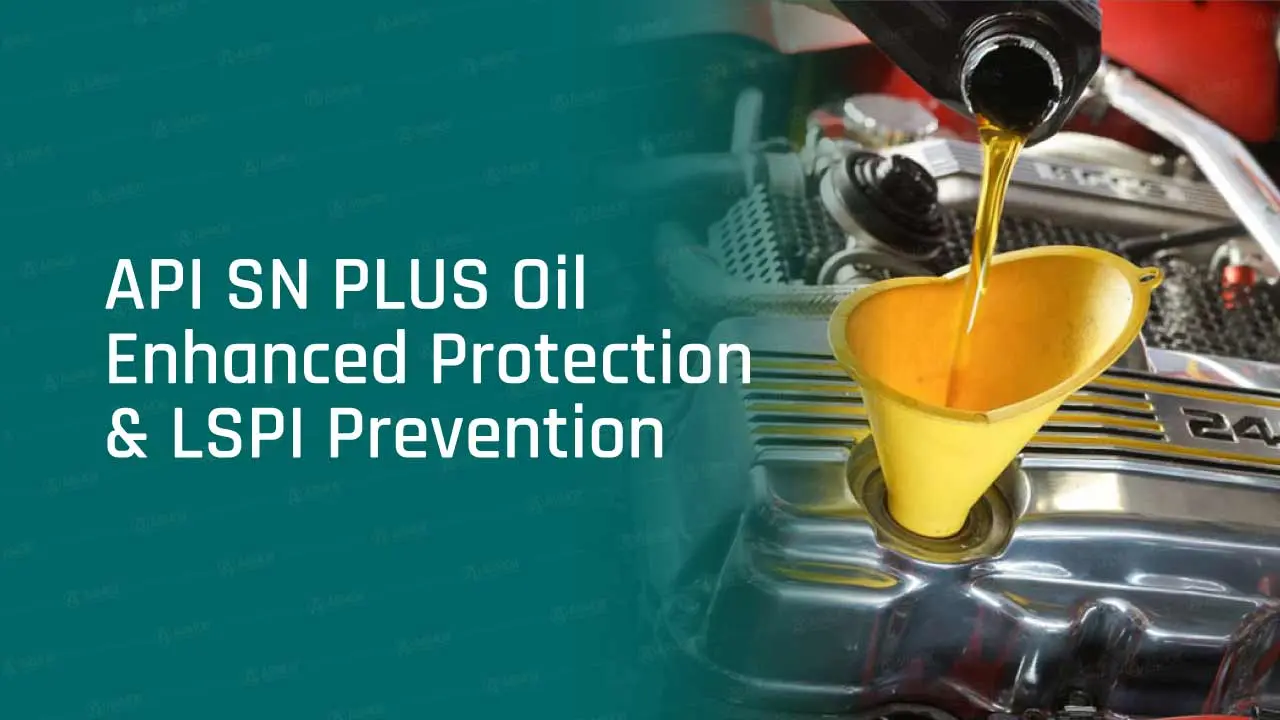
In the face of the challenges posed by LSPI, the lubricant industry responded swiftly with the API SN PLUS standard, a solution specifically engineered to protect modern engines.
API SN PLUS Oil was introduced in May 2018 as a supplement to both API SN and ILSAC GF-5 standards.1 It was developed in direct response to an urgent request from automakers to ensure protection against LSPI events in GDI and T-GDI engines. SN PLUS served as an "interim specification" or "supplemental service category" to bridge the gap between ILSAC GF-5 and the then-developing ILSAC GF-6A and GF-6B categories. It is fully backward compatible with the preceding API SN standard.
The repeated mention of SN PLUS as an "interim" or "supplemental" standard introduced in May 2018 6 to address the "urgent need" for LSPI mitigation, while GF-6 was still under development, points to the industry's rapid responsiveness. This was not a typical, planned standard evolution; rather, it was a swift, emergency measure to protect a significant portion of the new vehicle fleet from a potentially catastrophic issue. This highlights the agility of organizations like API and ILSAC in responding to emerging technological challenges and market demands.
The fundamental difference of API SN PLUS Oil from API SN lies in its additional performance requirements for LSPI mitigation.1 This mitigation is largely achieved through fundamental changes in additive technology, specifically by rebalancing detergent chemistry. Formulations meeting the SN PLUS standard typically exhibit significantly lower levels of calcium and higher levels of magnesium compared to API SN oils. Calcium has been shown to promote LSPI, while magnesium has little impact or helps to mitigate it.6 Although other formulation options exist, the calcium/magnesium rebalancing is the preferred approach observed in many SN PLUS oils.14
This shift in additive chemistry indicates that it's not just a vague improvement; it's a targeted chemical intervention. It illustrates the sophisticated engineering behind modern lubricants, where specific elements in parts-per-million concentrations can have a profound impact on engine protection. This level of precision is often overlooked by the average consumer but is critical to oil performance in complex engine environments.
API SN PLUS oil are required to pass a specific LSPI test, known as the API Sequence IX test. This test evaluates the ability of an engine oil to mitigate pre-ignition in Gasoline Turbocharged Direct Injection (GTDI) engines under low-speed and high-load operating conditions. It is commonly referred to as the Ford LSPI test. The API SN PLUS Oil limits for this test are less than 5 LSPI events.
The existence of a standardized, specific test (API Sequence IX) with clear limits (less than 5 events) is paramount. This means that "LSPI protection" is not merely a marketing claim; it is a verifiable performance standard. This standardization, overseen by API, provides a crucial layer of trust and assurance for consumers and OEMs, ensuring that oils bearing the SN PLUS designation genuinely deliver the promised protection. It translates a complex chemical problem into a measurable and reliable solution, which is vital for widespread adoption and confidence.
The use of API SN PLUS certified oils offers significant practical advantages for vehicle owners, directly linking technical improvements to real-world benefits.
The primary benefit is effective protection against LSPI, preventing catastrophic engine damage such as cracked pistons, broken spark plugs, and bent connecting rods. This mitigation directly contributes to extending the overall lifespan of the engine. API SN PLUS Oil formulations generally exceed API SN standards in overall protection.
The severe consequences of LSPI indicate that using anAPI SN PLUS oil is not just about optimal performance; it's about preventing costly major repairs and extending the fundamental service life of the engine. This elevates the perception of oil from a mere consumable to a vital protective component, emphasizing the importance of preventative maintenance. For the general public, avoiding catastrophic engine failure is a powerful motivator.
SN PLUS oils are specifically formulated to handle the higher operating temperatures and pressures inherent in GDI/T-GDI engines. By mitigating LSPI, these oils allow engine manufacturers to optimize engine tuning for better performance and efficiency without being constrained by LSPI risks. They maintain high-performance characteristics under severe conditions.
While API SN PLUS Oil primarily focuses on LSPI, it complements the ILSAC GF-5 standard, which incorporates improved fuel economy and emission control system compatibility. The broader advancements in engine oil, including those leading to SN PLUS, contribute to reduced emissions and improved fuel efficiency.
While LSPI protection is the headline feature, SN PLUS is part of a broader evolution of oil standards (ILSAC GF-5, then GF-6) driven by environmental regulations.2 By enabling OEMs to operate engines more efficiently and reliably, SN PLUS (and subsequent standards) indirectly supports lower greenhouse gas emissions and improved fuel economy. This highlights that seemingly small technical changes in lubricants have significant positive impacts on both the environment and vehicle operating costs.
To ensure the selection of the correct oil, consumers must understand how to identify certified API SN PLUS oil in the marketplace.
API-licensed oils display the API Service Symbol "Donut" and the API Certification Mark "Starburst". These marks indicate that the oil meets performance requirements established by vehicle and engine manufacturers and the lubricant industry.
The presence of these marks, which indicate that the oil has passed specific minimum performance standards through a series of laboratory bench, physical, chemical, and engine tests , provides a crucial layer of trust. The voluntary nature of the licensing 13 means that manufacturers choose to pay fees and undergo rigorous testing to earn these marks. This transforms the "Donut" and "Starburst" from mere symbols into powerful trust signals for consumers, indicating that the product has met independently verified performance criteria. It simplifies a complex technical decision into an easily recognizable visual cue.
Vehicle owners should always refer to their owner's manual for specific oil recommendations before consulting API charts. OEMs provide precise requirements for oil type, viscosity, and performance specifications. While API standards are general guidelines, OEM approvals are tailored to specific engine designs.
The consistent emphasis on checking the owner's manual highlights that API standards are foundational, but vehicle-specific OEM approvals (such as GM dexos1 Gen 2/3, Ford WSS-M2C, Chrysler MS-6395) are the ultimate authority for a particular vehicle. This means that while an oil may be API SN PLUS, it might not meet all the specific requirements for every GDI/T-GDI engine. The owner's manual bridges this gap, providing the exact blend of API, ILSAC, and OEM needs. This is a critical distinction for the general public, preventing them from making assumptions based solely on API categories. Using the wrong oil can lead to engine deposit buildup, increased friction and wear, poor performance, and potentially engine failure.27
Numerous major lubricant manufacturers quickly adopted and introduced API SN PLUS licensed products. Examples include Castrol, Pennzoil, Mobil, Quaker State, Lubrizol (an additive supplier), Total Energies, Ravenol, Eurol, Liqui Moly, Armor, and Amsoil. Many products already licensed under the dexos1nGen 2 specification were inherently compliant with API SN PLUS due to their LSPI protection capabilities.
The rapid availability of SN PLUS oils from numerous major brands demonstrates the lubricant industry's swift response to OEM demand. This ensured that consumers had access to the necessary protection shortly after the standard's introduction. It also highlights the competitive landscape, where brands quickly adapt to new specifications to maintain market relevance and offer comprehensive solutions.
API SN PLUS represents a significant step in the evolution of engine oils, but it is part of a larger, continuously developing system designed to meet the demands of modern engines.
API SP was introduced in May 2020, succeeding API SN PLUS.5 It incorporates all the requirements of API SN PLUS, including robust LSPI prevention.5 Key advancements of API SP compared to SN PLUS/SN include:
API SP is fully backward compatible with previous API service categories, including SN PLUS, SN, SM, SL, and SJ. This means that an API SP oil can be safely used in engines that originally required SN PLUS or older standards. The progression from SN to SN PLUS to SP demonstrates a clear trend of continuous improvement in engine oil technology. SN PLUS was a targeted fix for LSPI, but SP represents a more comprehensive advancement, addressing additional modern engine challenges like timing chain wear and improved deposit control. This indicates that the industry is not just patching problems but striving to provide increasingly holistic protection and efficiency, driven by the ever-evolving demands of engine design and environmental regulations.
API SP oils are backward compatible with API SN PLUS, SN, SM, SL, and SJ. This means that if your vehicle requires SN PLUS, an SP oil will provide full protection and often offer enhanced benefits. API explicitly states that "the latest engine oil service category includes the performance properties of each earlier category". Despite the introduction of SP, oils can still be licensed to meet older API categories, including SN PLUS.
The backward compatibility of API SP 4 simplifies consumer choice: generally, newer is better and compatible with older requirements. This is a significant user-friendly advantage. However, the fact that older categories like SN PLUS can still be licensed 2 points to a more complex industry reality. This means manufacturers may continue to produce and license SN PLUS for specific markets or existing inventories, even if SP is the "latest." This balance between simplifying consumer choice and managing industry-wide transitions is a key aspect of API's role.
ILSAC (International Lubricant Specification Advisory Committee) standards are a collaborative effort between U.S. and Japanese automobile manufacturers, focusing on engine protection and fuel economy. ILSAC GF-6 superseded GF-5 and is divided into two sub-categories:
API SP is derived from ILSAC GF-6 and applies to heavier viscosity grades, while ILSAC GF-6 applies to fuel-efficient viscosity grades. The introduction of GF-6B for ultra-low viscosity oils (0W-16) and its non-backward compatibility represents a significant development. This indicates an increasing divergence in engine oil requirements, where extremely low viscosities are becoming critical for new engine designs to meet stringent fuel economy targets, but these oils are not suitable for older engines. This means that while API SP provides universal backward compatibility for performance levels, viscosity requirements are becoming increasingly specific and non-interchangeable, making the "viscosity grade" section of the API Donut more crucial than ever for consumers.
Table 2: Key Differences: API SN vs. SN PLUS vs. SP
API SN PLUSMay 2018 Low-Speed Pre-Ignition (LSPI) mitigation Gasoline Direct Injection (GDI) and Turbocharged GDI (T-GDI) engines Yes, with SN API SPMay 2020 LSPI, timing chain wear protection, enhanced high-temperature deposit protection for pistons and turbochargers, stringent sludge and varnish control, oxidation stability 5Modern downsized GDI/T-GDI enginesYes, with SN PLUS, SN, SM, SL, SJ 4
| Standard | Introduction Date | Primary Focus / Key Additions | Targeted Engine Types | Backward Compatibility |
| API SN | October 2010 | Improved high-temperature deposit protection for pistons, more stringent sludge control, seal compatibility | General gasoline engines. | Yes, with previous categories |
Engine oils are surrounded by numerous misconceptions that can lead to incorrect decisions impacting engine health. It is crucial to dispel these myths and provide clear guidance.
Using the correct engine oil, as specified by the OEM and meeting relevant API/ILSAC standards, is paramount for:
In contrast, using the wrong oil can lead to engine sludge buildup, increased friction, poor performance, damage to components, and potentially catastrophic engine failure. This stark contrast between the benefits of using the correct oil and the repercussions of using the wrong oil demonstrates that proper oil selection is not just a matter of optimal performance; it is a critical preventative measure against significant financial burdens and inconvenience for the vehicle owner. This elevates the importance of oil choice from a routine task to a crucial maintenance decision.
Understanding the API SN PLUS Oil standard and its subsequent evolutions represents a crucial step for vehicle owners in maintaining their engine's health and ensuring longevity.
The automotive and lubricant industries are in a constant state of innovation, driven by technological advancements and environmental regulations. Engine oils are not static commodities; they are precisely engineered fluids vital to engine performance, longevity, and efficiency.
Understanding this continuous evolution means that engine oils are not just static products, but sophisticated engineered solutions that adapt to new challenges. This encourages a mindset of continuous learning and adaptation for optimal vehicle maintenance. Staying informed about the latest standards ensures your vehicle receives the best possible care and protection, safeguarding your investment and contributing to a cleaner environment.